I write about application performance, monitoring, and DevOps, sharing insights and tips to help teams build faster, more reliable, and efficient software.
External dependencies can silently slow or break your app. Learn why monitoring them is now essential for APM, and how Atatus gives you full control over performance.
Discover how to cut latency and boost response time using APM. Learn actionable strategies, monitor critical metrics, and optimize your applications with Atatus for faster, more reliable user experiences.
Learn everything about Application Performance Monitoring (APM) in this complete guide. Understand metrics, detect issues, and optimize your apps for better performance.
If you run a SaaS business, Application Performance Monitoring is a must to assure the availability of software applications. APM tools can help DevOps understand how application releases impact service performance, security, and dependability.
Discover how Stackify Retrace compares with Atatus from a developer’s perspective. Learn about real-world challenges, feature differences, and why growing teams are choosing Atatus for better visibility, faster performance insights, and responsive support.
Find out why engineering teams are moving to Atatus from AppDynamics for easy deployment, affordable pricing, and unified performance monitoring across their stack.
Discover why businesses are moving from New Relic to Atatus. Explore the top reasons behind this shift and how Atatus offers better performance monitoring, cost efficiency, and actionable insights.
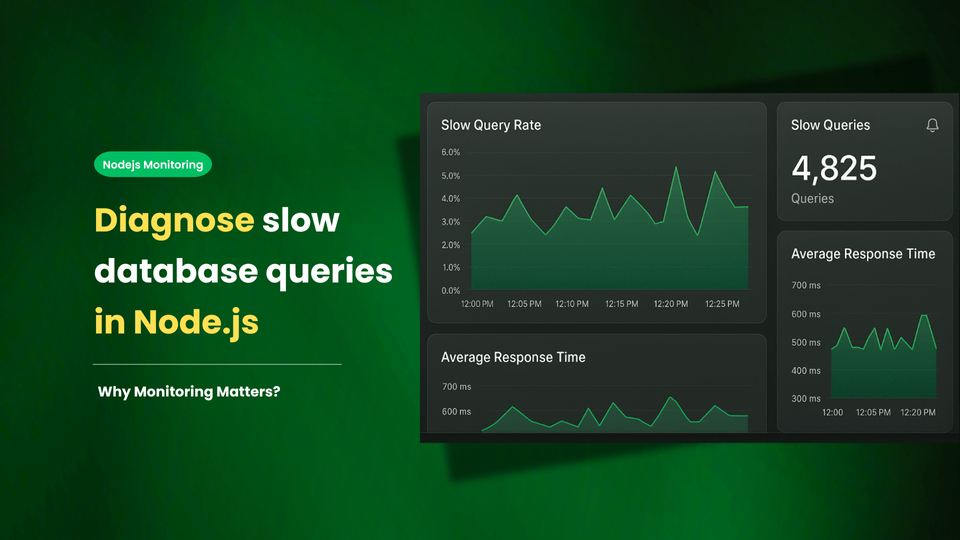
Learn how to identify and fix slow database queries in Node.js. Explore common causes, key metrics, and why monitoring with Atatus helps teams resolve issues efficiently.
For efficient Java performance tuning, it's critical to monitor the proper aspects and use the right tools. The following is a list of our top Java performance monitoring tools.
Monitor your entire software stack
Gain end-to-end visibility of every business transaction and see how each layer of your software stack affects your customer experience.


![10 Proven APM Best Practices to Reducing Latency and Improving Response Time [2026 Updated]](/blog/content/images/size/w960/2025/10/Reduce-Latency---Improve-Response-Time-with-APM.png)
![Application Performance Monitoring (APM) Guide: Monitor and Optimize Application Performance - [2026 Update]](/blog/content/images/size/w960/2025/10/APM-GUIDE---Monitor-and-Optimize-Application-Performance.png)