Accelerate Vulnerability Remediation with Atatus: From Detection to Secure Deployment
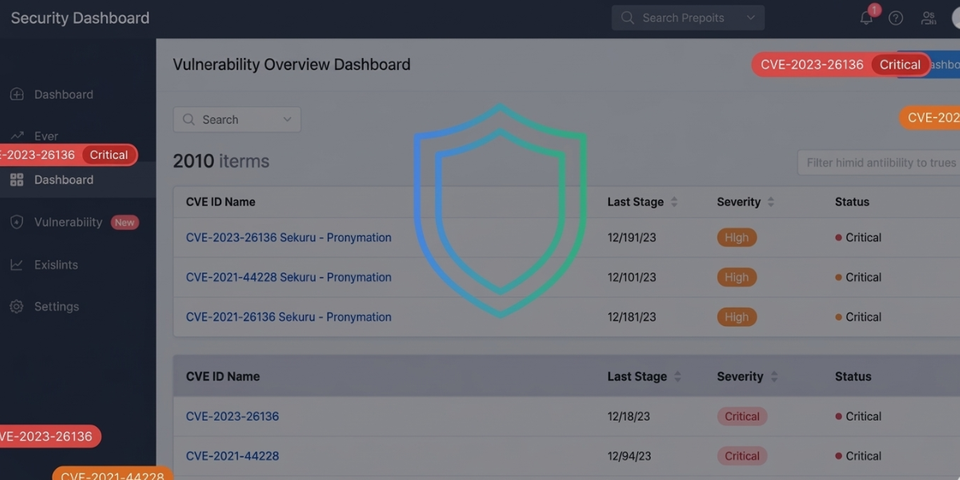
In microservices and cloud-native environments, vulnerabilities buried in transitive dependencies or runtime behaviors can go undetected for weeks. During that time, your attack surface keeps expanding and production systems remain exposed. The longer remediation is delayed, the greater the risk of exploitation, compliance failures, and operational disruption.
In this post, we walk you through how Atatus Vulnerability Management handles the entire remediation workflow, from precise detection to secure deployment, enabling teams to resolve risks up to 3× faster.
- Step 1: Detect with Runtime Precision
- Step 2: Review Vulnerability Details and Guidance
- Step 3: Prioritize with Contextual Intelligence
- Step 4: Get Root Dependency Insights Before Fixing
- Step 5: Fix Vulnerabilities at the Dependency Level
- Step 6: Verify and Monitor Post-Remediation
Step 1: Detect with Runtime Precision
Atatus vulnerability management continuously scans your full stack, applications, hosts, and cloud assets, without disrupting performance. It identifies CVEs in third-party libraries, OS packages, Docker images, and IaC configs using feeds like NVD, EPSS, and threat intel.
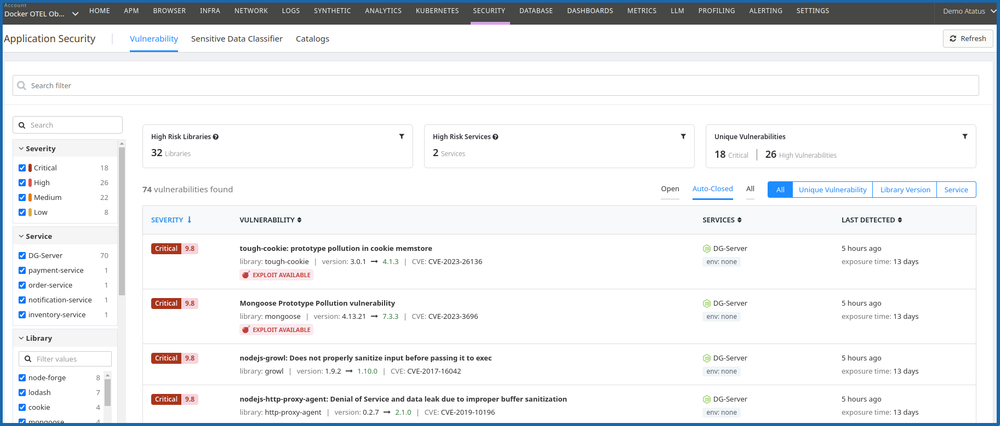
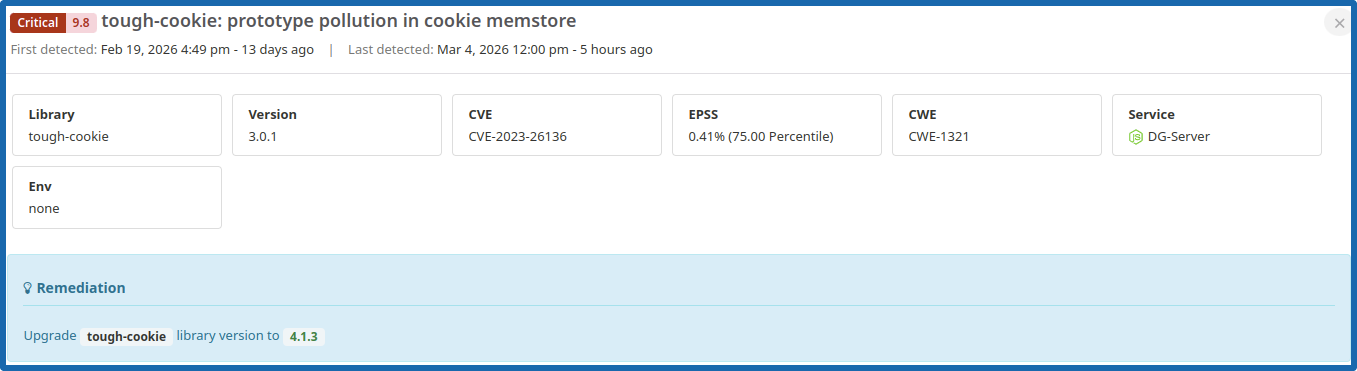
Unlike static scanners, Atatus correlates findings with APM traces and logs to confirm whether a vulnerability is actively reachable. The dashboard surfaces every detail clearly, library name, version, CVE ID, CWE, EPSS score, affected service, and exposure window, so teams know exactly what they are dealing with.
Step 2: Review Vulnerability Details and Guidance
Each vulnerability card presents the full picture, CVSS score, EPSS probability, affected library and version, CVE ID, CWE classification, impacted service, and environment context. Teams also get a precise timeline: first detected date, last detected date, window of exposure, and CVE published date.
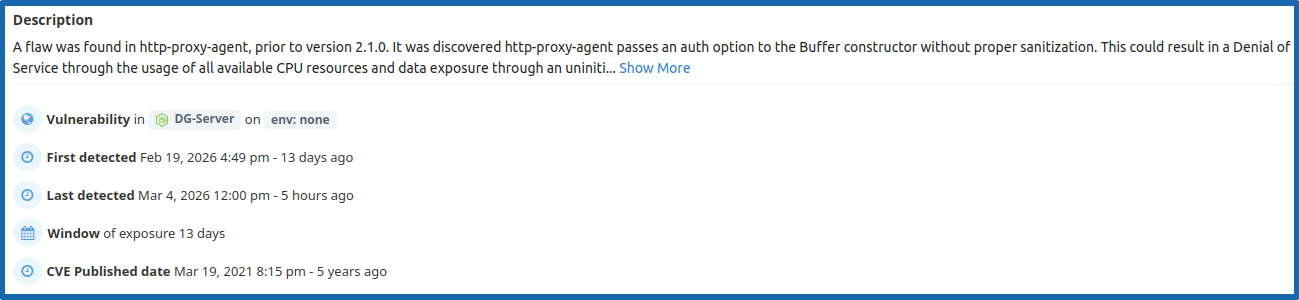
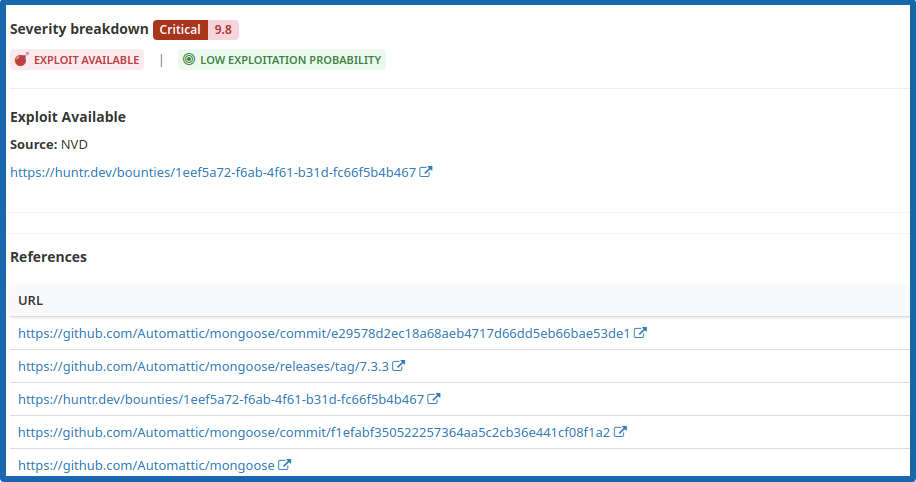
The Remediation section makes the fix clear and direct. It tells you exactly which version to upgrade to, with no guesswork involved. The severity breakdown shows whether a public exploit is available and the exploitation probability, helping teams assess real-world risk before acting.
Step 3: Prioritize with Contextual Intelligence
Not every vulnerability needs immediate attention. Atatus auto-groups vulnerabilities by root dependency, so fixing one outdated library can resolve multiple transitive CVEs at once.
Atatus prioritizes vulnerabilities by weighing exploitability, runtime exposure, and blast radius across microservices, so teams always know what to fix first.
Step 4: Get Root Dependency Insights Before Fixing
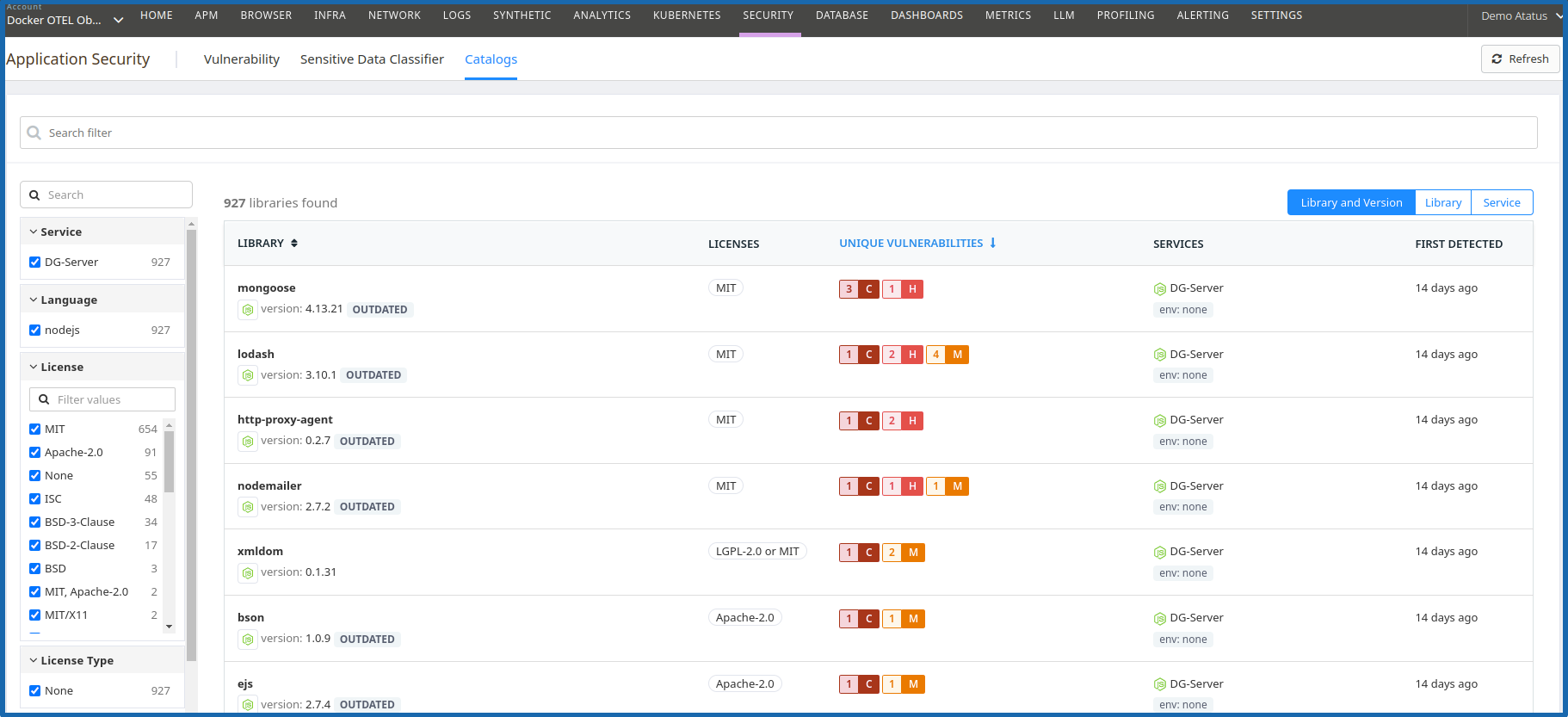
Upgrades carry risk. Before acting, Atatus surfaces key metadata including publish date, license changes, maintainer health, and impact forecasts. The Catalogs view lists all libraries in use across your services, flagging outdated versions, license types, and vulnerability counts per library. Teams can filter by service, language, license, and version status for complete visibility.
Step 5: Fix Vulnerabilities at the Dependency Level
Once a vulnerability is reviewed, teams can trigger remediation directly from the dashboard. Atatus provides the exact upgrade path for your package manager, so you can apply the fix directly without manually tracking down the right version. The suggested upgrade is clearly stated within the vulnerability detail, making the action straightforward for any team member.
CI/CD plugins embed scans into every build, and IDE alerts via the VS Code extension keep developers informed early in the development cycle, shifting security left without adding overhead.
Step 6: Verify and Monitor Post-Remediation
Once a fix is deployed, Atatus runs automated post-deploy re-scans to confirm resolution. The dashboard updates with a Resolved status, and teams can track patch coverage and MTTR trends over time.
Ongoing monitoring flags regressions immediately if a new vulnerability appears in a previously fixed dependency. Compliance reports for SOC2 and HIPAA audits can be exported with full vulnerability history and risk reduction summaries.
Context is the Key to Effective Vulnerability Management
Transitive vulnerabilities are inevitable in modern software. A single outdated root dependency can introduce dozens of CVEs across multiple services without a single line of your own code changing. The real challenge is not finding them. It is having enough context to fix them safely, knowing which service is actively running the affected library, what the precise upgrade version is, and what downstream impact that change will have.
That context is what separates a vulnerability list from an actionable remediation workflow. When CVE data is tied to runtime services, CVSS v4 scores, EPSS probability, CWE classification, and exact upgrade paths, teams stop guessing and start shipping fixes with confidence. Post-deployment re-scans close the loop, confirming resolution and keeping patch coverage measurable over time.
Without this level of visibility, critical exposure windows stay open longer than they should. And as the Ascension breach showed, the cost of delayed remediation goes far beyond a technical debt conversation.
Detect Vulnerabilities Before They Reach Production
Identify vulnerable dependencies, understand runtime exposure, and fix security risks faster with complete visibility across services, libraries, and infrastructure.
#1 Solution for Logs, Traces & Metrics
 APM
APM
Kubernetes
Logs
Synthetics
RUM
Serverless
Security
More