
Detect critical issues instantly. Ignore the noise automatically
Atatus AI continuously analyzes telemetry patterns across logs, metrics, and traces to surface only the alerts that truly matter before your users feel the impact.
70%
Alert noise reduction
3×
Faster incident detection
<5min
Time to first alert rule
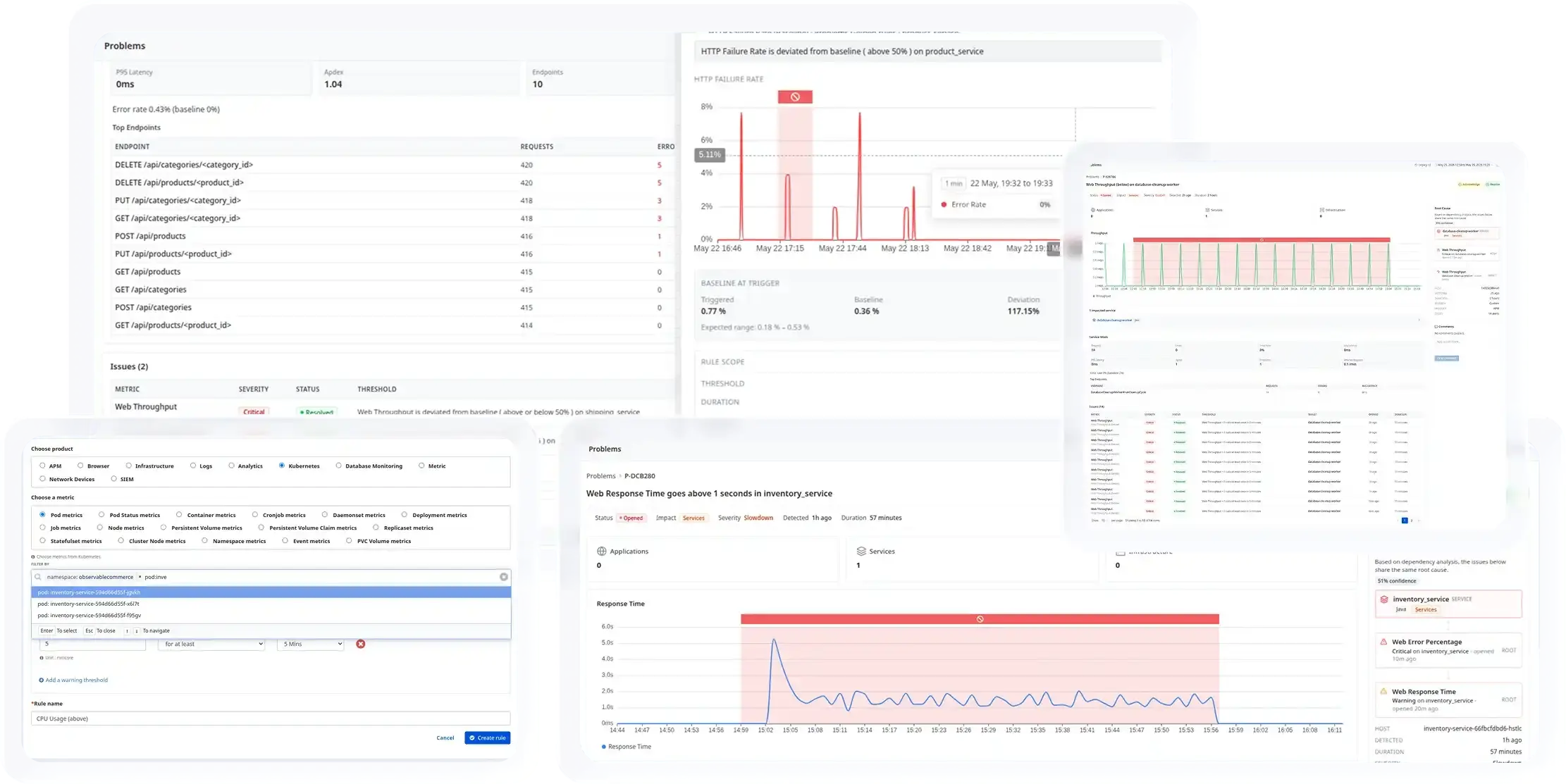
Intelligent alerting built for modern engineering teams
From anomaly detection to root cause analysis — Atatus gives SREs, DevOps, and platform engineers the signal clarity to act fast and recover faster.
AI-Powered Alert Correlation
AI groups semantically related alerts across services and infrastructure into unified incidents — eliminating duplicate pages and exposing the true blast radius of an issue instantly.
Real-Time Incident Detection
Sub-minute anomaly detection across infrastructure, APM, and RUM data. Threshold, rate-change, and anomaly-based rules work together to catch issues the moment they emerge.
Intelligent Noise Reduction
Dynamic baselines, maintenance windows, and AI-driven deduplication suppress redundant alerts automatically. On-call engineers get only what demands their immediate attention.
Logs · Metrics · Traces Correlation
Every alert surfaces correlated logs, metrics, and distributed traces automatically — giving your team the context to diagnose root cause without manual pivoting between tools.
Intelligent alerting built for faster incident response
Cut through alert noise with AI-driven alerting that helps engineering teams detect anomalies, correlate incidents, identify root causes, and resolve issues faster with full system context.
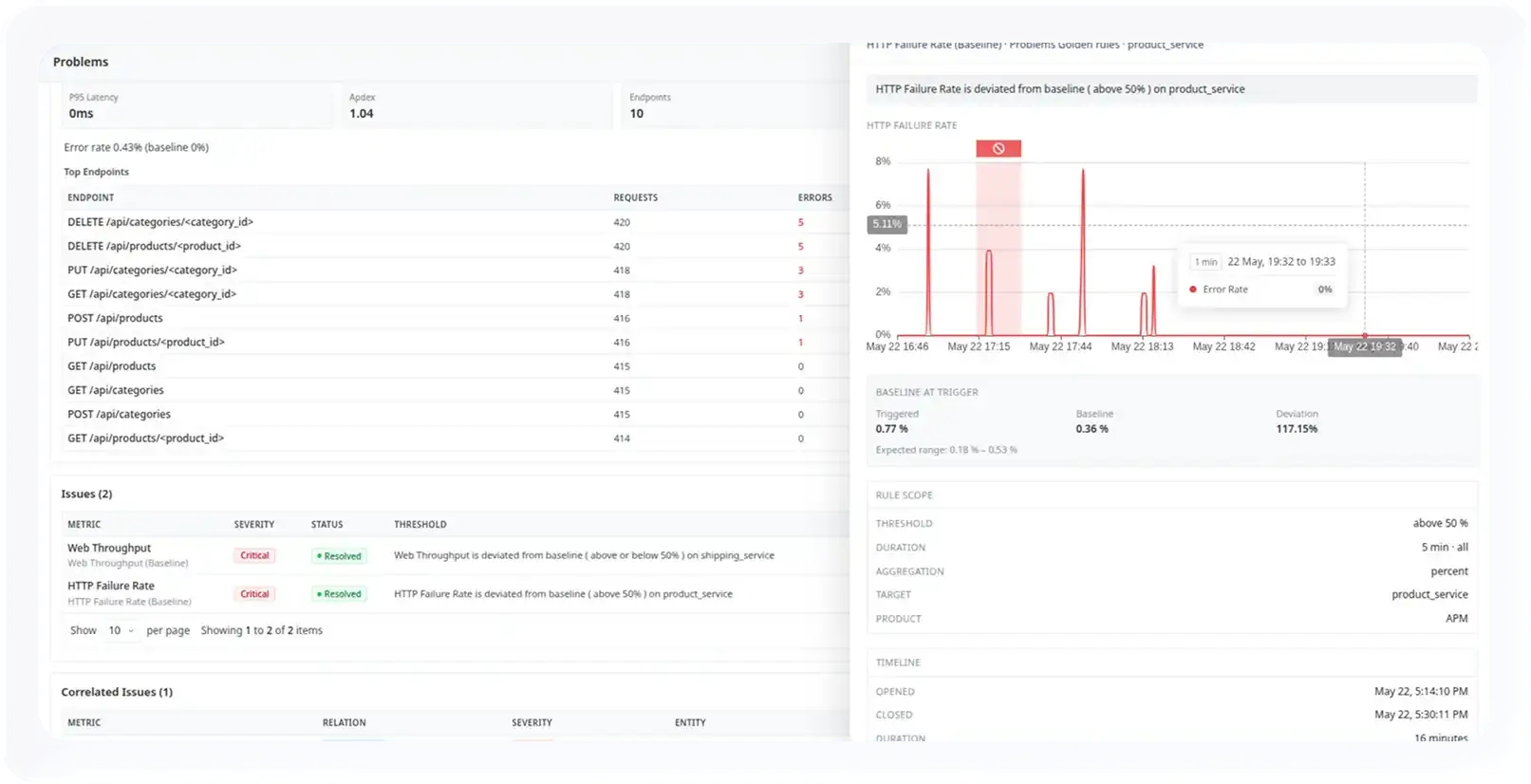
Turn Chaotic Incidents into Organized Problems
Atatus Problems feature automatically groups related incidents, identifies root causes, and tracks resolution across your entire infrastructure, eliminating noise and surfacing what actually matters.
- Intelligent grouping of related incidents based on dependency analysis, service topology, and causal relationships, not just pattern matching.
- Automatically trace upstream failures to the source service with confidence scoring. Understand exactly which component triggered the cascade.
- See all impacted services at a glance, correlated logs, transaction traces, and historical trends - all context in one place.
- Problems track response time spikes, error rates, throughput changes, and custom metrics across your entire tech stack simultaneously.
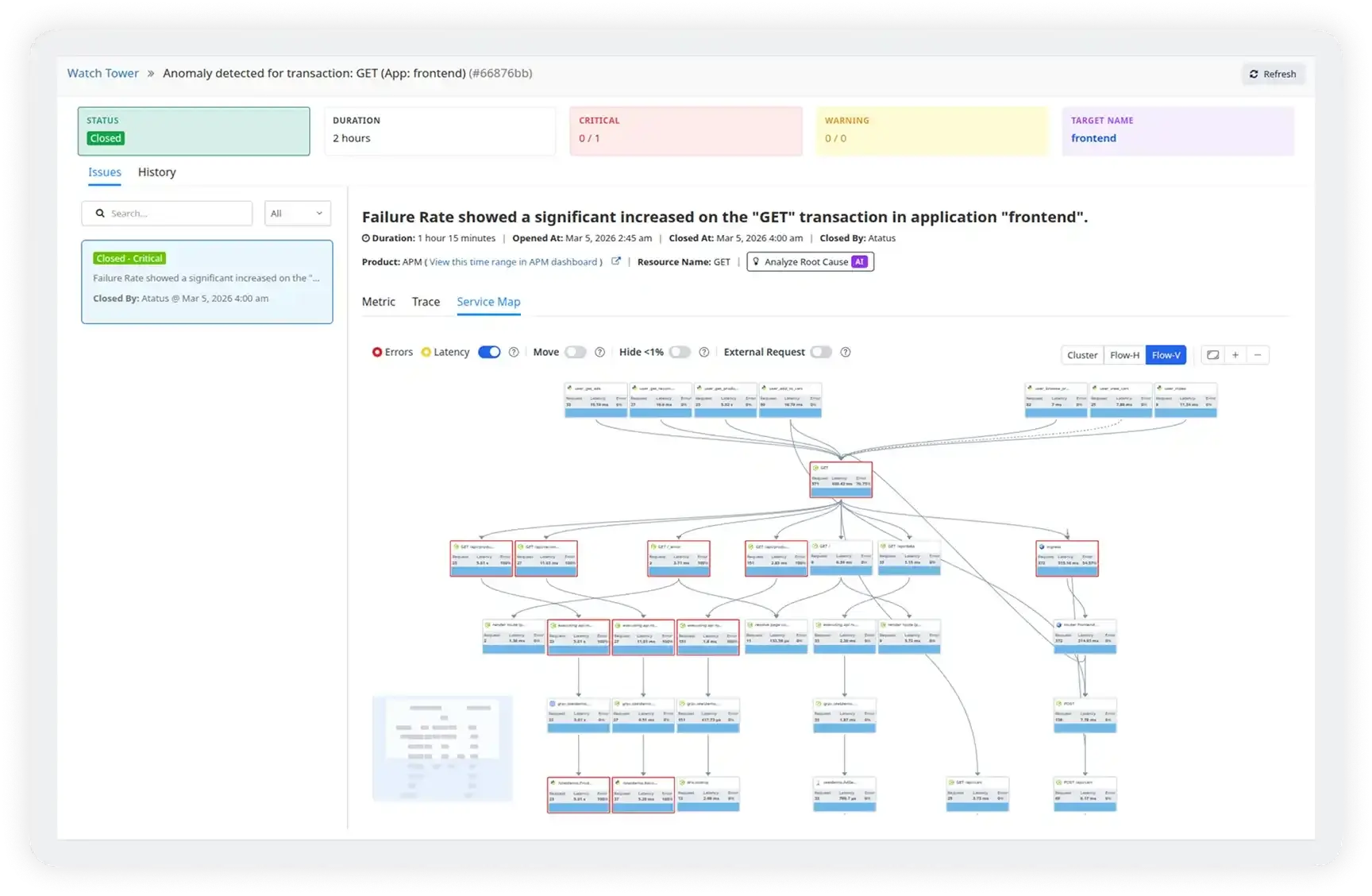
Next-generation alerting that thinks with you
AI continuously analyzes telemetry patterns across logs, metrics, and traces to surface only the alerts that truly matter — ranked by impact, routed to the right team, and enriched with full context.
- Adaptive anomaly detection that learns your system's baseline and distinguishes genuine degradation from normal variation — no manual threshold tuning needed.
- AI-driven alert prioritization scores every incident by impact severity, customer reach, and service criticality — so P1s don't get buried under P3 noise.
- Predictive alerting surfaces early-warning signals — like disk I/O trajectory breaches — before hard thresholds are crossed, giving teams proactive runway.
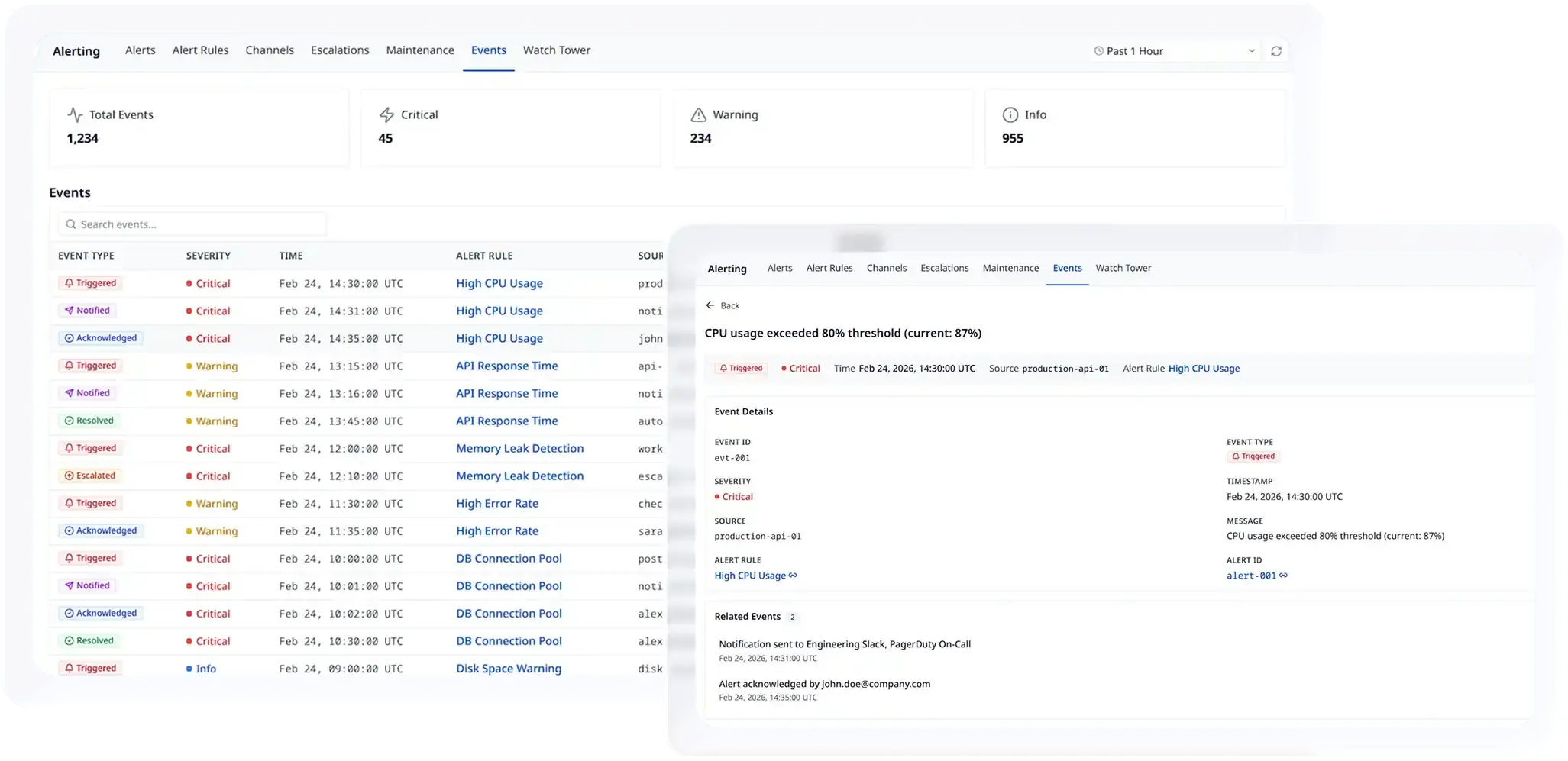
One incident, not fifty alerts
Atatus correlates alerts across services, hosts, and telemetry types to identify the common upstream cause — instantly collapsing alert storms into a single, actionable incident.
- Composite alert rules that trigger on correlated signals across multiple services — not just isolated thresholds — to catch systemic degradation early.
- Automatic service dependency mapping surfaces which upstream failures are causing downstream cascades — without manual topology configuration.
- Event timeline reconstruction shows the exact sequence of signals that led to an incident — accelerating post-incident review and preventing recurrence.
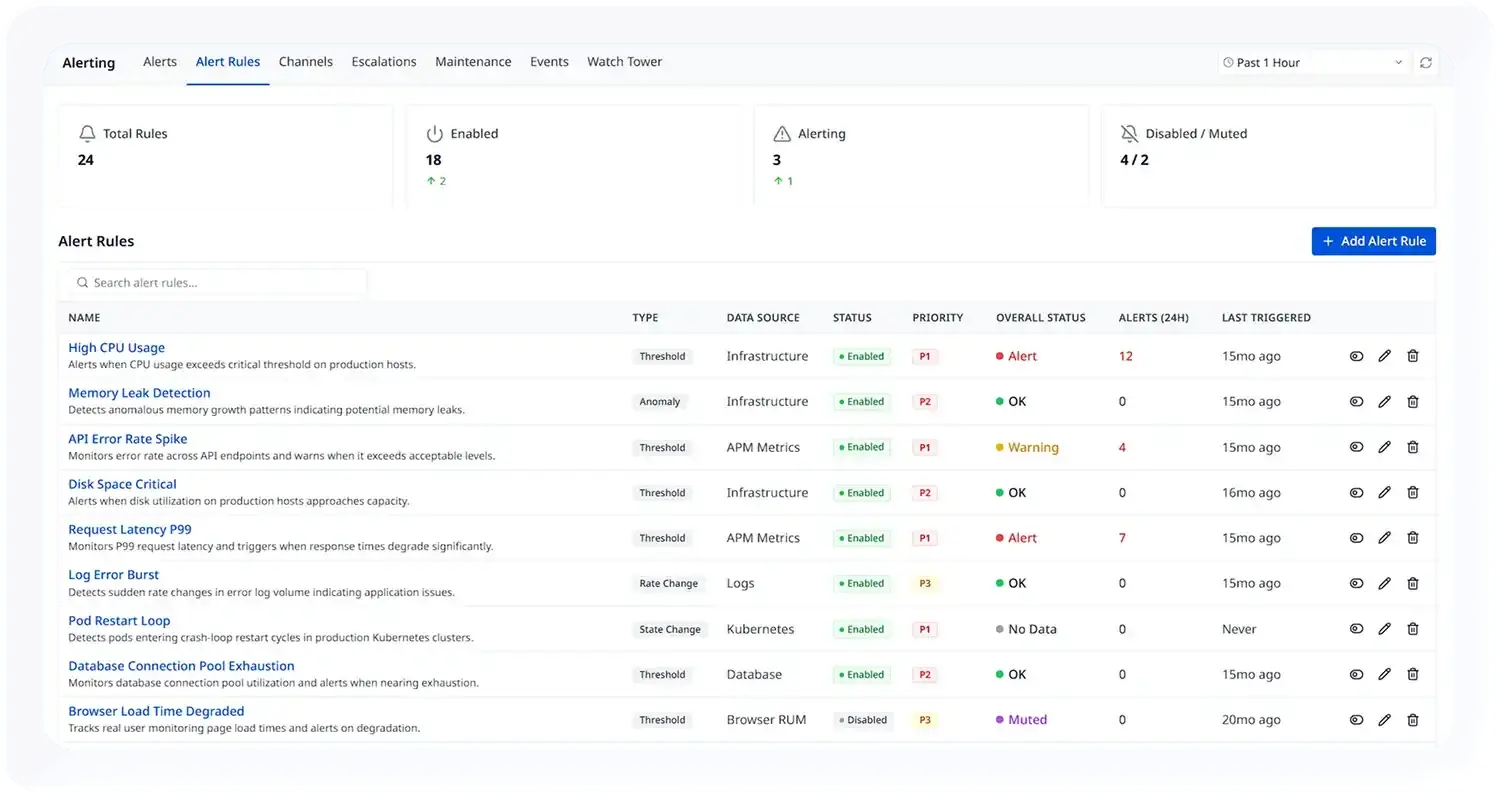
Stop the noise. Protect on-call focus
When every alert matters, no alert gets ignored. Atatus uses dynamic suppression, maintenance windows, and muting rules to keep your on-call queue meaningful — not overwhelming.
- Scheduled maintenance windows suppress alerts for planned deployments, migrations, and load tests — preventing false positives from routine operations.
- AI deduplication groups repeated alerts from the same root cause, sending one notification instead of hundreds during an alert storm.
- Flap detection prevents noisy alerts from re-triggering on transient spikes — only notifying when a condition is consistently degraded over time.
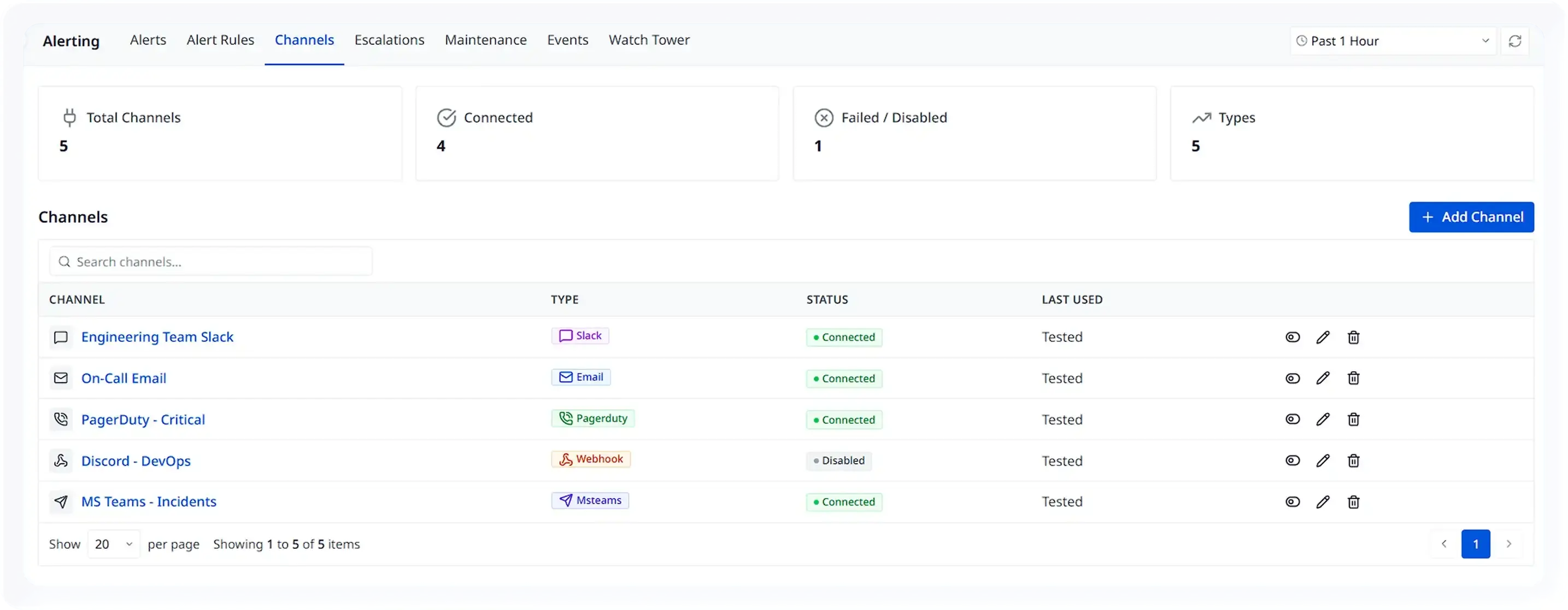
The right alert, to the right person, on the right channel
Atatus routes alerts through structured escalation policies — ensuring critical incidents reach the right on-call team immediately, with automated fallback and repeat notifications.
- Multi-level escalation policies with configurable team routing, repeat intervals, and automatic escalation when acknowledgment doesn't occur within SLA.
- Channel health monitoring detects and flags failed or disabled notification channels before a critical incident — so the pipeline never fails silently.
- Bi-directional integrations with Slack, MS Teams, PagerDuty, and Opsgenie allow teams to acknowledge and resolve alerts without leaving their workflow.
Smart Alerting for
Complex Systems Focus
Purpose-built alerting platforms are designed with incident response workflows at their core. Generic monitoring tools with alerting features treat it as an afterthought. Atatus was engineered from day one around how your team actually operates during incidents.
Service-Level Problem Mapping
Understand the full blast radius of any incident. Visualize which services are affected, which are dependent, and which are just noisy followers. Separate signal from noise in complex architectures.
Private Infrastructure Deployment
Keep your alert data and configurations within your own network. Some teams need alerting that stays behind their firewall, with zero external dependencies for critical incident notification.
Reliable Alert Delivery & Deduplication
Ensures your team gets notified reliably while preventing alert storms. Intelligent grouping means your on-call engineer sees the real problem, not 47 variants of the same issue.
Integrations
Alert where your team already works
Atatus connects to your existing incident response stack — so teams get actionable alerts in the right channel, with the right context, without switching tools.
Slack
Instant alerts in any channel with full incident context, priority, and one-click acknowledge/resolve actions directly from Slack.
Microsoft Teams
Rich incident cards in Teams channels with escalation status, service impact, and correlated telemetry — built for enterprise workflows.
PagerDuty
Bi-directional PagerDuty integration for critical incident escalation. Sync alert status, team routing, and on-call schedules seamlessly.
Opsgenie
Route high-priority alerts to Opsgenie with full alert metadata and observability context — enabling fast, informed incident response.
Webhooks
Custom webhook integrations for any internal system, ITSM tool, or automation pipeline. Flexible payload configuration with retry support.
Structured alert emails with incident summary, affected services, priority, and direct links to correlated logs and traces in Atatus.
Start Alerting in Under 5 Minutes
Three simple steps to intelligent alerting. No credit card required.
Connect Your Services
Link your applications and infrastructure to Atatus. Auto-discover services and start monitoring key metrics instantly.
Configure Alert Rules
Set thresholds using static baselines or dynamic anomaly detection. Create composite alerts combining multiple conditions.
Route to Teams
Connect Slack, PagerDuty, JIRA, email, or webhooks. Configure routing based on severity, service, and on-call schedules.