Frontend → Backend Correlation
Click any slow XHR in a RUM session and jump directly to its backend APM trace. Shared trace IDs, no manual log digging.
Enhance release quality, frequency, and operational efficiency through real-time monitoring of performance errors and correlated data across environments. Monitor the entire release management process from start to finish.
From slow interactions to critical failures, gain complete visibility into your application and respond with confidence.
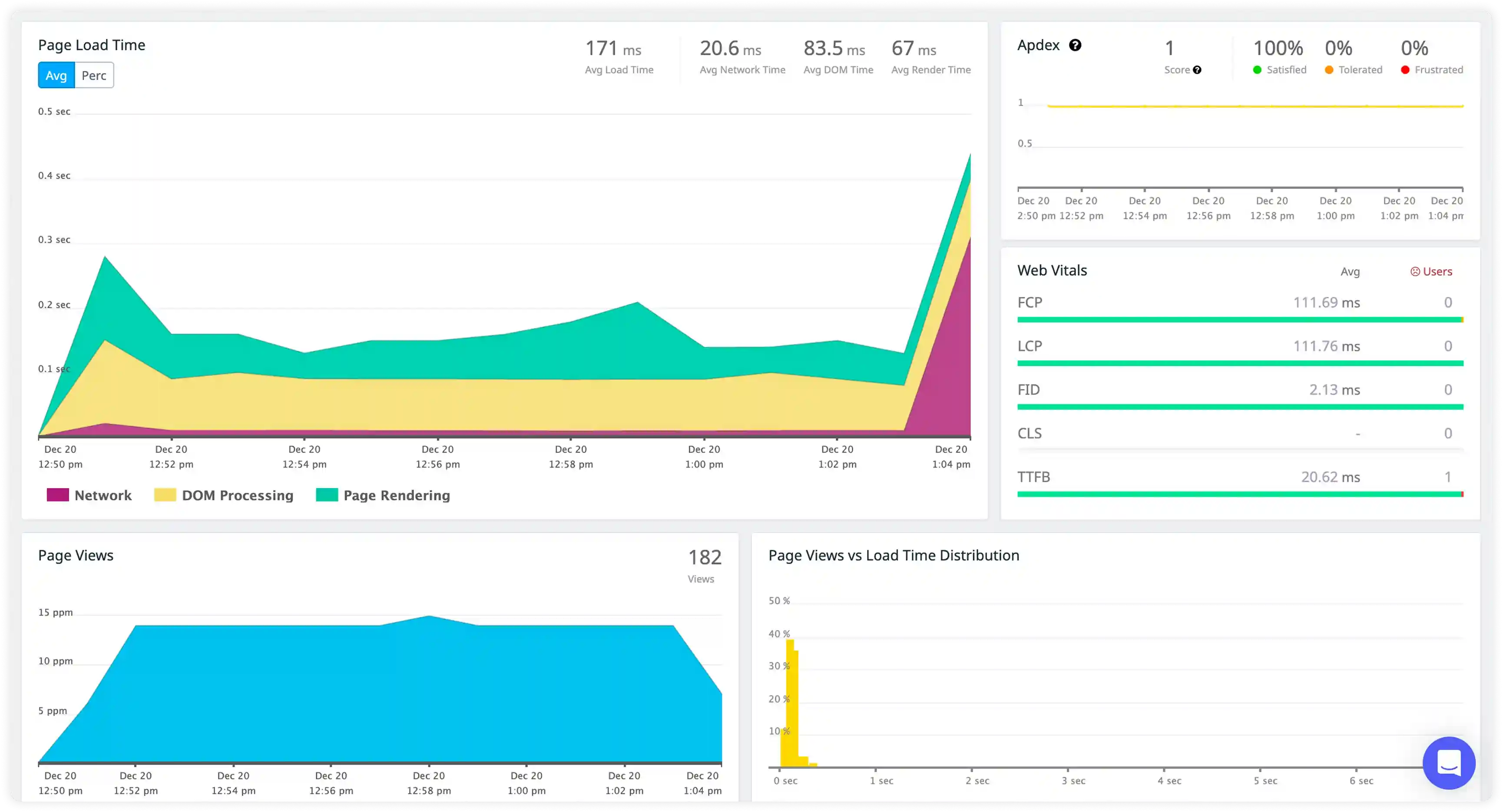
Capture Core Web Vitals, custom performance marks, and JavaScript errors across 100% of your real traffic, not a sampled subset. Segment by geography, browser, OS, and user cohort instantly.
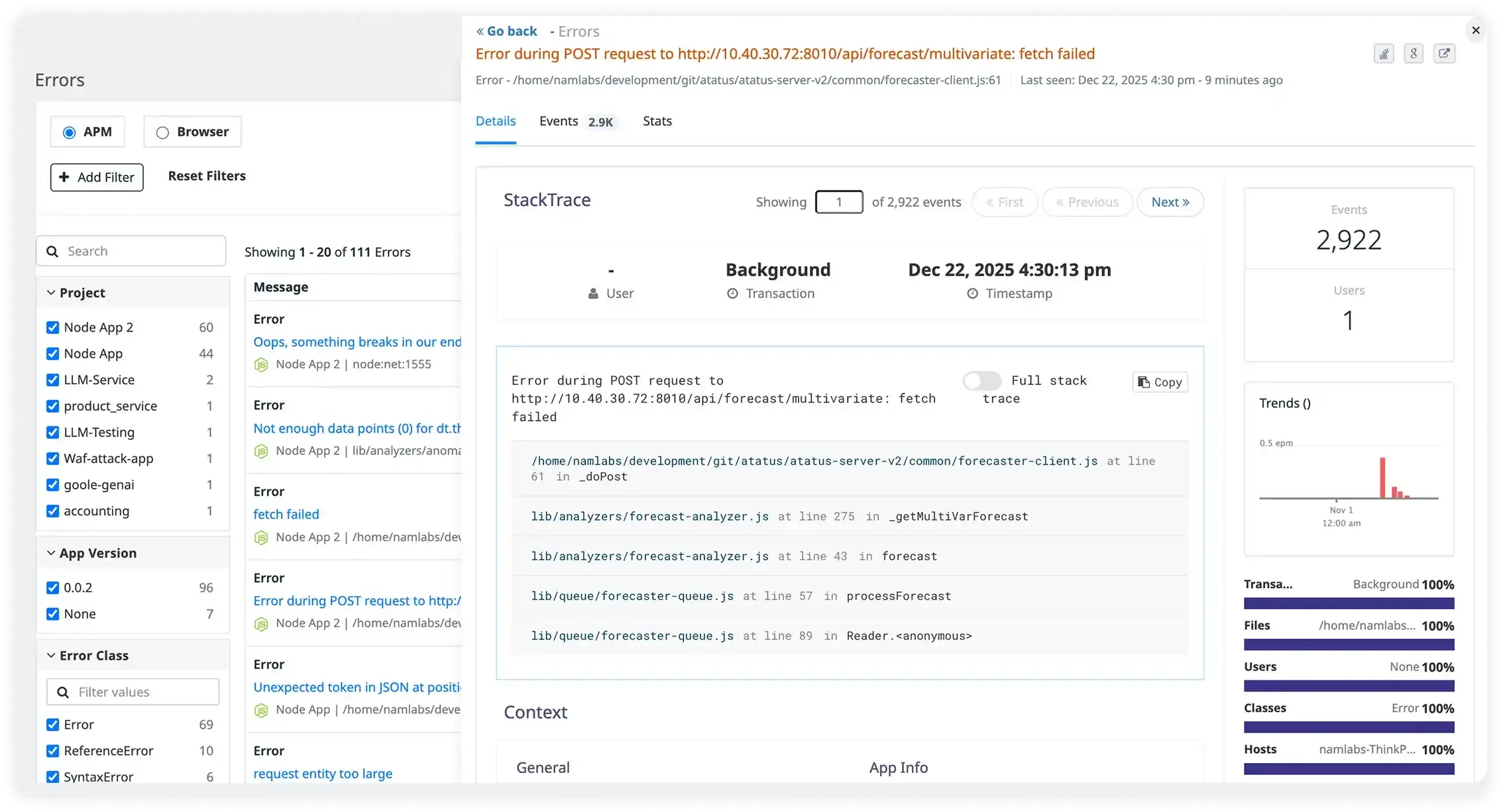
Atatus intelligently deduplicates and groups JavaScript errors so you see "500 occurrences of this null-pointer" instead of 500 separate alerts. Assign to owners, track regressions across deploys.
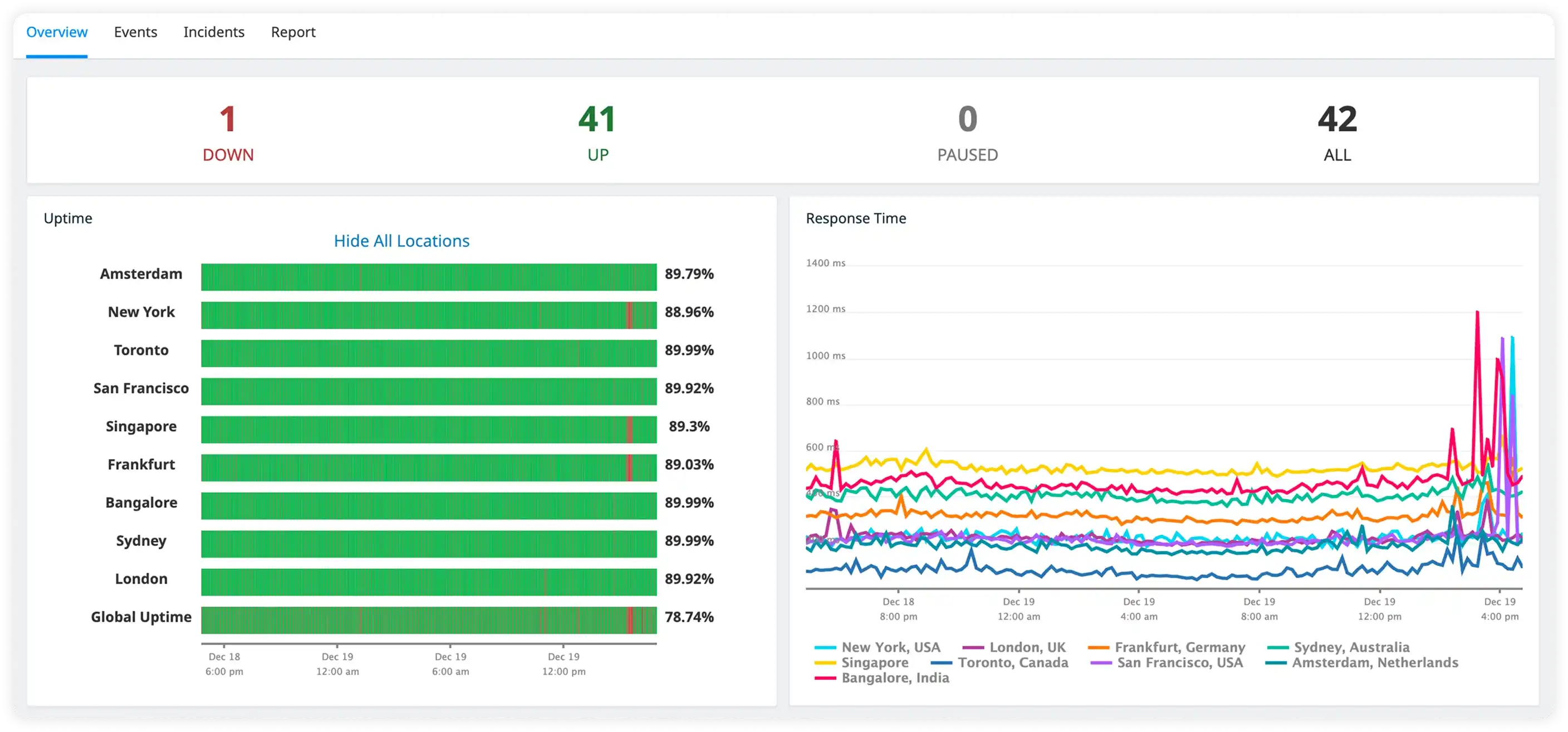
Run scripted browser tests from 50+ global locations 24/7. Catch login flows, checkout sequences, and API availability issues before they hit real users. Set SLAs per endpoint and get alerted instantly on breach.
Click any slow XHR in a RUM session and jump directly to its backend APM trace. Shared trace IDs, no manual log digging.
Map where users drop off, which paths convert, and how performance at each step affects completion rates, not just page-level metrics.
Define SLOs on any metric. Anomaly-based, threshold, and trend alerts routed to Slack, PagerDuty, or webhook, no alert fatigue.
Build engineering and executive views side by side. Share live SLA dashboards with stakeholders, no login required.
Annotate every release on your performance timeline. Instantly correlate error spikes and latency regressions with the exact deploy that caused them.
PII masking on by default. SOC 2 Type II certified, GDPR compliant, with configurable data residency built for regulated industries.
Atatus adapts to how engineering teams work across development, operations, and reliability.
Debug errors and slow paths with the full context of what happened.
Atatus for developersTrack deployments and see how each release affects stability.
Atatus for DevOpsWatch latency and error rates to ship with less production risk.
Atatus for release engineers"Solid Product even better support." The integration path is incredibly simple/easy and the overall interface is very intuitive. That said, I had a handful of odd use cases that the support team was incredibly responsive in helping me work through.
Pricing, deployment, data and the agent. If something is missing, a person will answer it on a demo call.
Lighthouse measures a single synthetic load from a controlled environment. Atatus captures every real user on every device, browser, and network condition — 24/7. You see the 95th percentile load times your fastest users never experience, the exact moment a deploy caused a spike, and which geography or browser is silently failing. DevTools is for debugging one session. Atatus is for understanding thousands simultaneously.
One script tag, under 5 minutes. Paste the JS snippet into your page and Core Web Vitals, JavaScript errors, and session data begin flowing immediately — no configuration required to get initial value. SDKs are available for React, Vue, Angular, Next.js, Nuxt, and plain JavaScript. Adding custom events, user identification, and advanced segmentation typically takes another 30–60 minutes depending on your stack.
Datadog and New Relic price DEM as premium add-ons layered on top of their infrastructure observability base — most teams end up underusing it because of cost. Atatus includes RUM, Session Replay, Synthetics, and Error Tracking in core plans with no per-seat charges. Teams consistently report 40–60% cost savings vs Datadog for equivalent DEM coverage. Where the big platforms win is breadth of infra integrations. Where Atatus wins is DEM depth, pricing predictability, and faster time to value.
Sentry captures the error event. Atatus answers the context around it — who was affected, what did they do in the 60 seconds before it happened, how did it impact their journey, and did a recent deploy trigger it? Session Replay, RUM performance data, user journey funnels, and backend APM trace correlation are all connected. Many teams run both — Sentry for deep stack traces, Atatus for the full user experience picture.
PII masking is enabled by default. Atatus automatically masks all input fields, password fields, and sensitive text nodes — you explicitly opt in to recording specific elements, not the reverse. Custom CSS-based masking rules handle edge cases. All replay data is encrypted at rest and in transit. Atatus is SOC 2 Type II certified and GDPR compliant, making it suitable for regulated industries.
Yes — when you have both Atatus DEM and APM instrumented, a slow XHR request in any RUM session links directly to its backend distributed trace. You can see which service timed out, which database query ran long, or which downstream dependency caused the slowdown. Frontend and backend telemetry share the same trace ID, so the correlation is automatic — no manual log searching required.
Yes. Atatus fully supports React, Vue, Angular, and Next.js SPAs, including client-side routing via History API and hash-based navigation. Page views, performance metrics, and error tracking all respect virtual page transitions automatically. Session Replay correctly stitches multi-route sessions into a single coherent playback, so you see the full user journey — not just isolated page loads.
Start free and send your first trace with OpenTelemetry or the Atatus agents. APM, logs, RUM, infrastructure and SIEM, all on one timeline.