1. Home
  2. Solutions
  3. Threat Observability
Solutions

Detect Threats 10x Faster with Full Observability Context

Atatus Threat Observability is the intelligence layer inside Atatus SIEM, correlating logs, metrics, and traces in real time so your DevOps, SRE, and Security teams can detect, investigate, and respond to threats with complete context.

OpenTelemetry nativeSaaS, on-prem, hybrid or BYOCNo per-user pricing
10xFaster mean time to detect
98%Alert noise eliminated
3minsAvg. threat triage time
24/7Continuous threat visibility
Capabilities

Your SIEM has the data. But not the context.

Without unified telemetry, security events are just noise. Threat Observability turns your SIEM data into a complete, and actionable picture.

  • 01

    Alert fatigue burning out your team SIEM generates 500–1,000+ alerts daily. Without observability context to rank them, every alert feels equally urgent and real threats get missed.

  • 02

    Logs alone don't tell the full story A log event shows what happened. A correlated trace shows how an attacker got there. A metric shows the blast radius. You need all three in one place.

  • 03

    Investigations start from scratch every time Manual pivoting between APM, log search, infra dashboards, and security tools adds hours per incident. Atatus SIEM with Threat Observability eliminates the pivot.

  • 04

    Kubernetes and container activity is invisible Ephemeral workloads don't leave traces in traditional log pipelines. Without runtime observability, attackers exploit the gaps between your pods and your SIEM.

Use Cases

Built for every security workflow in Atatus

Threat Observability powers the security capabilities across Atatus's product suite, linked directly to the products your team already uses.

Kubernetes Security

Kubernetes Runtime Security

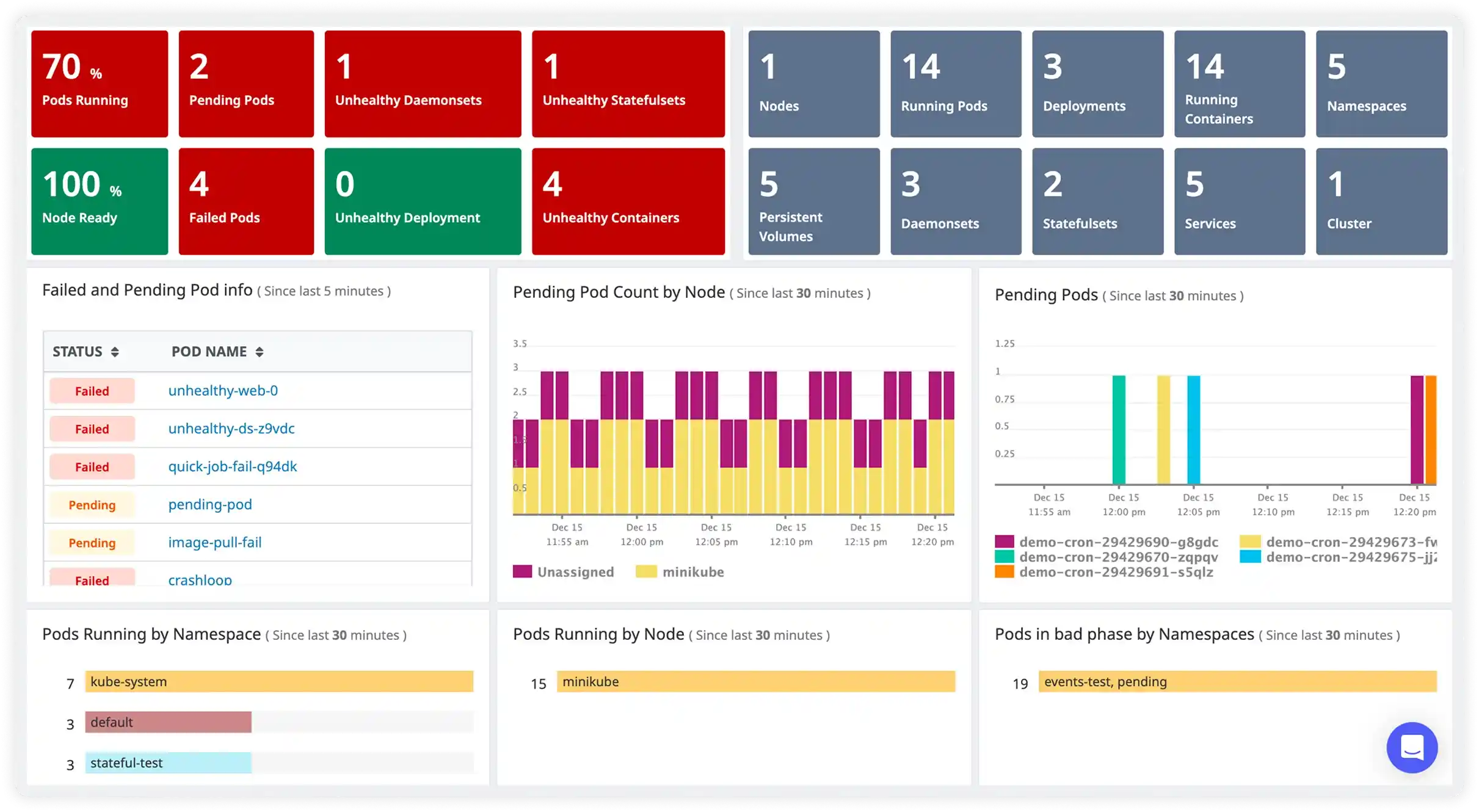
Kubernetes clusters are high-value attack targets. Container breakouts, supply chain attacks, and misconfigured RBAC are invisible to log-only SIEMs. Atatus understands pod lifecycle, service mesh traffic, and control plane events natively, so Threat Observability detects what others miss.

  • Detect runtime anomalies such as unexpected process executions, network connections, and file writes inside containers
  • Monitor Kubernetes audit logs inside Atatus SIEM for RBAC abuse and API server anomalies
  • Correlate container network flows with trace spans to identify C2 communication patterns
  • Enforce continuous security posture, not just at deploy time
Kubernetes Runtime Security
DevSecOps

DevSecOps Continuous Security

Atatus bridges Dev, SRE, and Security with shared observability data. Threat Observability adds a security intelligence layer on top of your existing APM and log pipeline, so vulnerabilities found in production have full trace context, not just a CVE number.

  • Surface runtime vulnerability exploitability from Atatus Application Security Management, not just CVSS scores
  • Detect suspicious behavior introduced by new deployments within minutes using APM traces as context
  • Shared SIEM dashboards for Dev, SRE, and Security, one source of truth
  • Auto-generate response tickets and runbooks on threat detection via Atatus Alerting
DevSecOps Continuous Security
Incident Forensics

Incident Forensics & Investigation

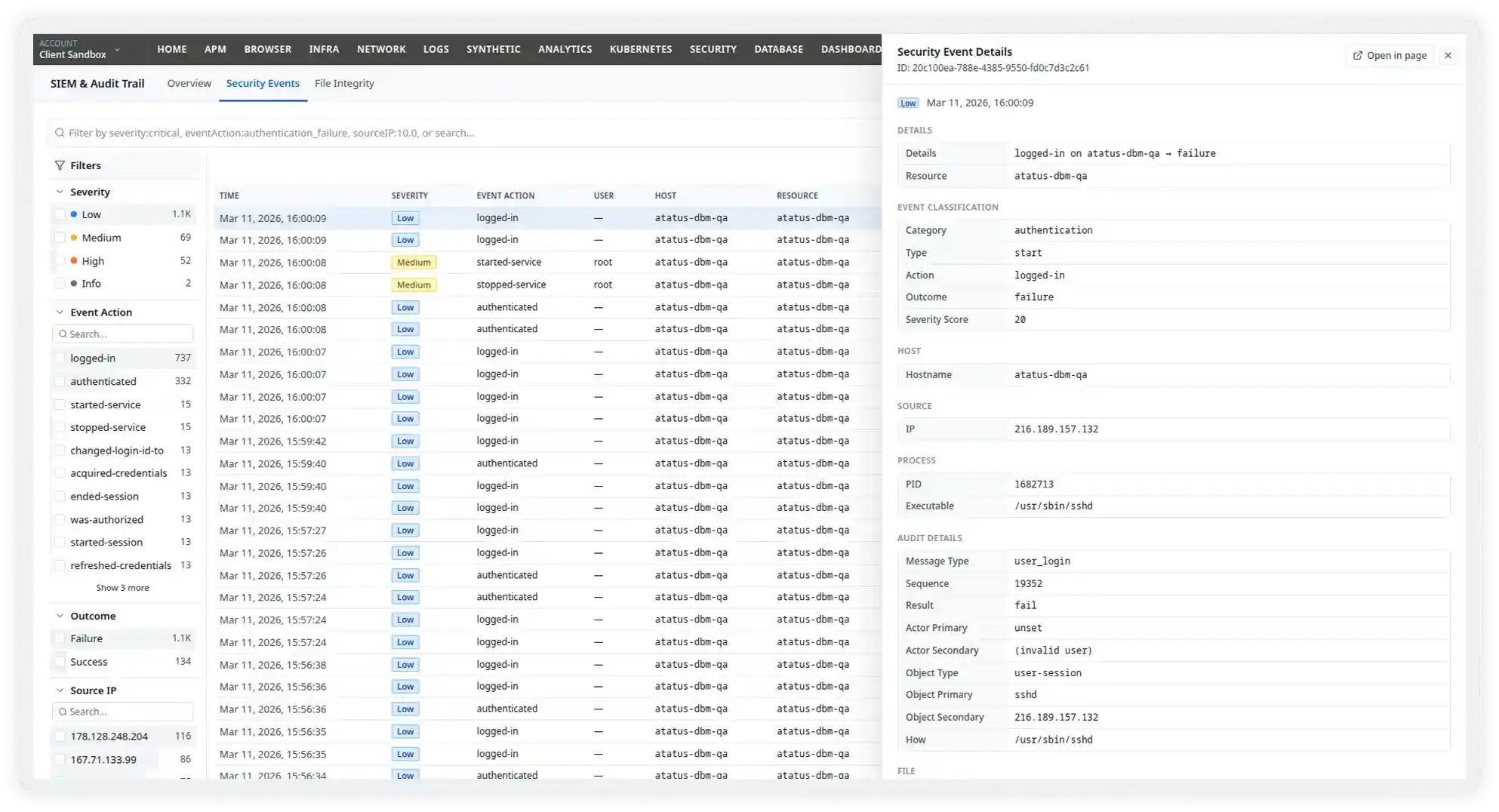
Atatus Log Management retains years of logs, metrics, and traces with full observability context. Threat Observability extends this into a forensic investigation platform, letting you reconstruct exactly what happened, when, and through which service path.

  • Query logs, metrics, events, and traces simultaneously with Atatus's unified search
  • Timeline view that reconstructs full kill chains from first recon to exfiltration using distributed traces
  • Identify indicators of compromise (IoCs) hidden in trace spans that log-only tools miss
  • Export evidence packages for compliance, legal, and regulatory reporting
Incident Forensics & Investigation
Cloud Security

Cloud Security Event Management

Modern cloud environments generate hundreds of thousands of security events daily. Atatus SIEM ingests events from AWS, Azure, and GCP, then Threat Observability enriches them with service topology and exposure context to reduce the signal from 400K events to a handful of real alerts.

  • Ingest AWS CloudTrail, GCP Audit Logs, and Azure Monitor events directly into Atatus SIEM
  • Enrich cloud alerts with real-time service topology and exposure scores from Atatus Infra Monitoring
  • Automatically categorize events by MITRE ATT&CK tactic and surface only actionable threats
  • Visualize blast radius and affected services for any cloud security event
Cloud Security Event Management
Core Capabilities

What Threat Observability unlocks inside Atatus SIEM

Runtime Threat Detection

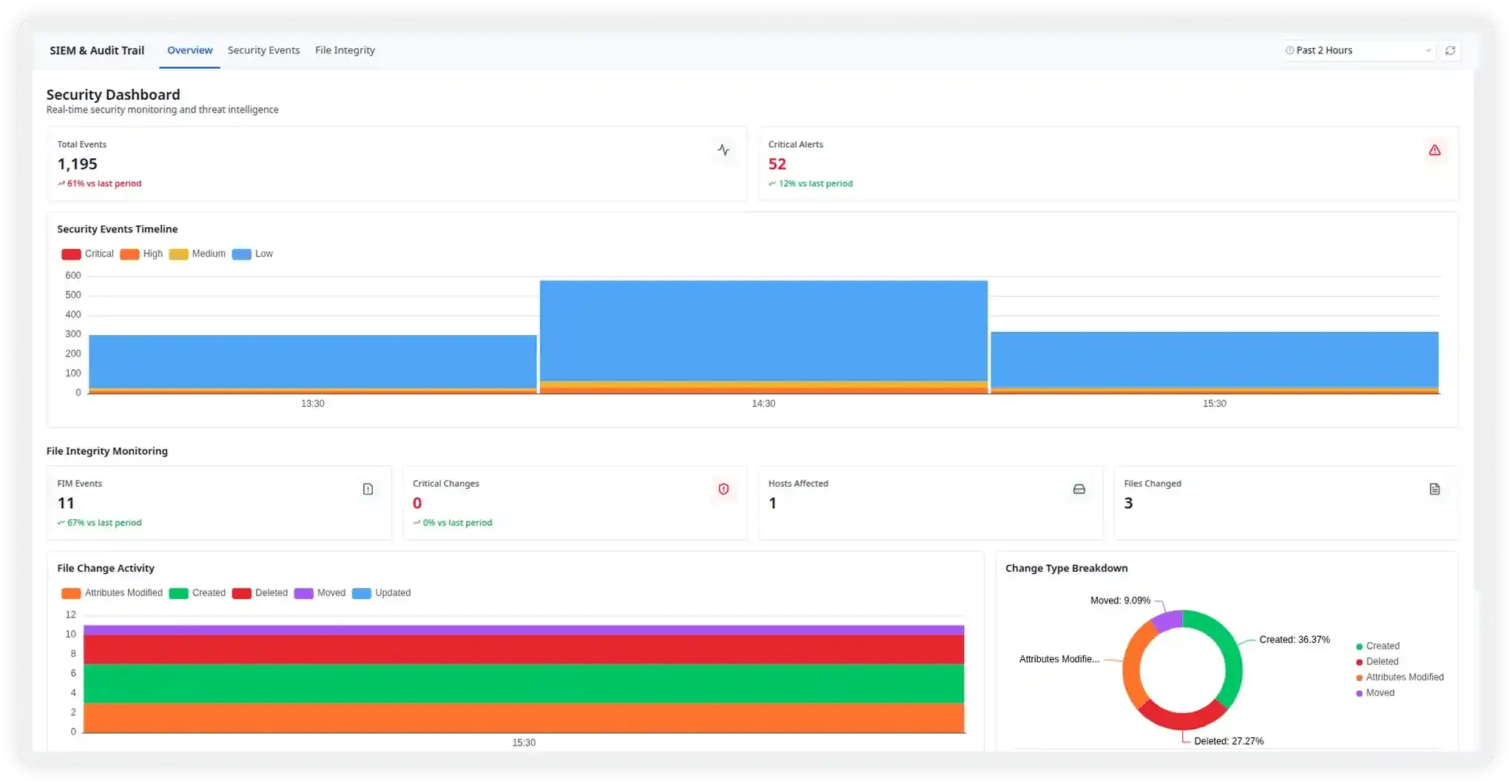
Continuously analyze runtime behavior across your entire stack such as apps, containers, microservices, APIs, and serverless functions. Atatus correlates SIEM log events with live trace spans and metric anomalies, detecting zero-days, privilege escalations, and injection attacks in real time.

Alert Noise Reduction

Atatus SIEM ingests thousands of raw events. Threat Observability enriches each event with observability context like service exposure, active sessions, request traces to rank only what truly matters.

Automated Threat Correlation

AI automatically links related log events, trace spans, and metric spikes into a single incident timeline, no manual pivoting required. What used to take 45 minutes now takes under 3.

Attack Path Analysis

Visualize exactly how an attacker moved from initial access to lateral movement to target. Distributed traces capture recon activity that logs alone would miss entirely.

Faster Incident Response

Reusable response playbooks, automated workflows, and one-click runbooks built on Atatus's existing alerting capabilities. Consistent, fast response.

Continuous Compliance Monitoring

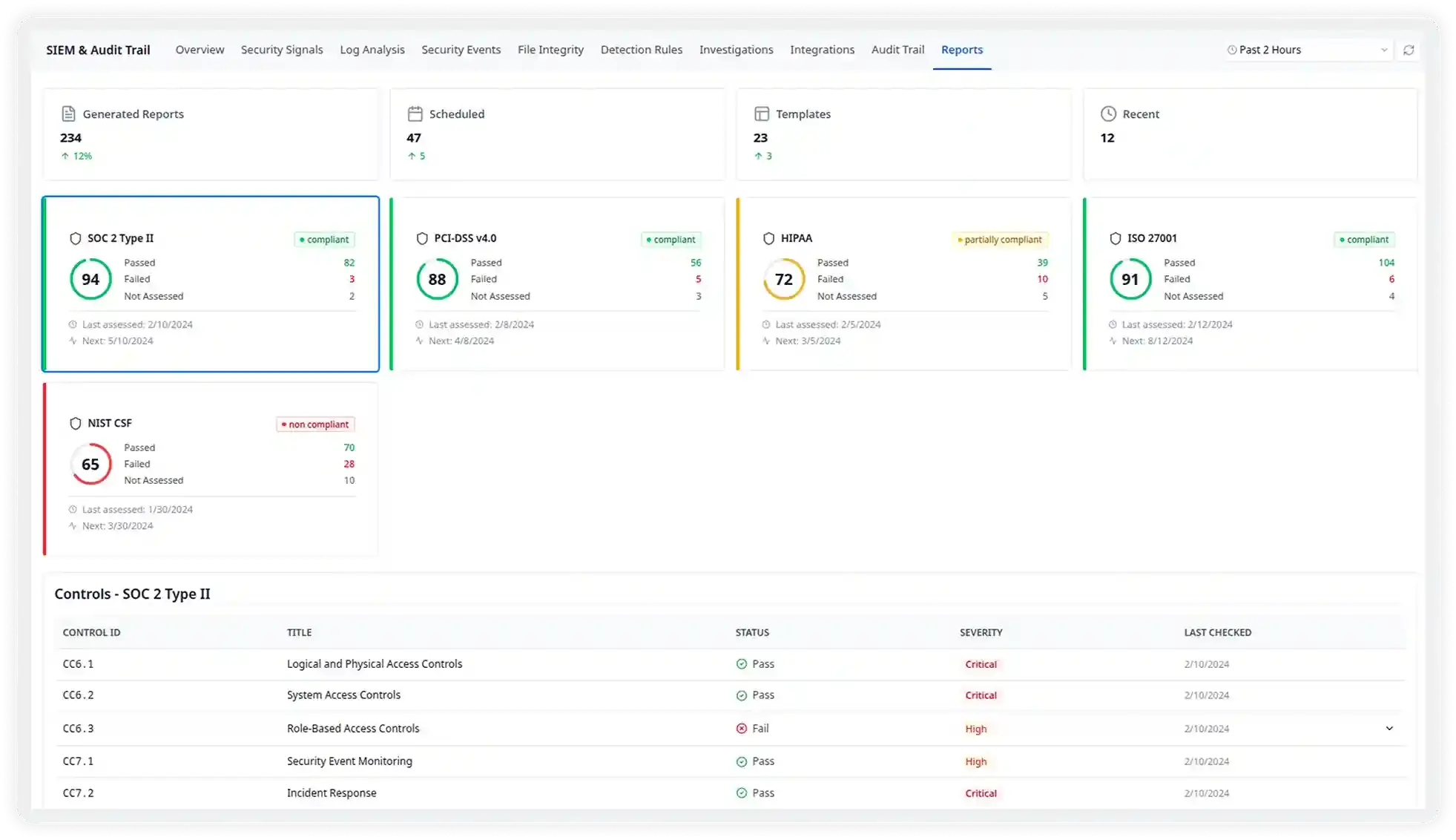
Automatically map security events to compliance frameworks like SOC 2, PCI-DSS, HIPAA, and ISO 27001. Atatus SIEM retains enriched telemetry for audit-ready evidence packages, so your next compliance review starts from complete data, not scattered logs.

Teams

Unified Observability for Every Engineering Team

Atatus adapts to how engineering teams work across development, operations, and reliability.

Customers

Powering better performance for modern teams

"Solid Product even better support." The integration path is incredibly simple/easy and the overall interface is very intuitive. That said, I had a handful of odd use cases that the support team was incredibly responsive in helping me work through.

Wes DSite Reliability Engineer
FAQ

Questions Engineers Ask Before Buying

Pricing, deployment, data and the agent. If something is missing, a person will answer it on a demo call.

  • No. Threat Observability is the intelligence layer built into Atatus SIEM, it's what makes the SIEM capable of correlating logs with traces and metrics from across your stack. You don't need to buy or configure a separate tool. If you have Atatus SIEM and the relevant Atatus observability products connected (APM, Infra Monitoring, Kubernetes Monitoring), Threat Observability activates automatically.

  • Atatus ASM provides vulnerability detection and risk-based prioritization across your application layer. Threat Observability consumes those signals, combining CVE/EPSS data from ASM with live runtime trace activity to determine whether a vulnerability is being actively exploited, not just theoretically at risk. This eliminates the classic security-vs-dev debate of "is this actually exploitable in our environment?"

  • Atatus Kubernetes Monitoring already tracks pod lifecycle, service mesh communication, and container runtime behavior. Threat Observability ingests this telemetry and treats it as first-class security context. Correlating Kubernetes audit log events in SIEM with live trace spans, detecting lateral movement across namespaces, and flagging RBAC anomalies with full service dependency context. Supports EKS, GKE, AKS, OpenShift, and self-managed clusters.

  • Yes. Atatus is SOC 2 Type II certified, ISO 27001 compliant, and GDPR-ready. Threat Observability data including incident timelines, attack paths, and telemetry context is retained and exportable for compliance evidence packages. This covers PCI-DSS audit trails, HIPAA access monitoring, and GDPR incident response documentation.

  • Threat Observability delivers value from log data alone but its most powerful capabilities (attack path analysis, trace-based forensics, alert enrichment with service topology) require Atatus APM and/or Infrastructure Monitoring to be active. The more Atatus products you have connected, the richer the observability context and the fewer false positives your team has to review.

  • Atatus enriches each SIEM event with observability context before it reaches your alert queue: Is the affected service publicly exposed? Is there an active user session? Does a correlated trace show anomalous behavior? Did this same IP appear in a distributed trace 60 seconds earlier? Events that lack meaningful context are auto-suppressed. Only the subset with confirmed risk signals surface as alerts, typically a 98% reduction in volume.

  • Most teams receive their first contextualized threat alerts within 4 hours of connecting their Atatus SIEM to their log sources. Full threat observability including trace-correlated incidents and attack path analysis, typically becomes available within 1–3 days as behavioral baselines are established across your instrumented services.

  • Yes. Atatus Log Management provides a powerful query interface that spans logs, metrics, events, and traces - purpose-built for hypothesis-driven threat hunting. You can run retroactive queries against long-term retained telemetry, build saved hunts using MITRE ATT&CK technique patterns, and share repeatable investigation playbooks with your team. The Sensitive Data Classifier also helps identify where sensitive data flows before a breach occurs.

Get started

See the root cause first.

Start free and send your first trace with OpenTelemetry or the Atatus agents. APM, logs, RUM, infrastructure and SIEM, all on one timeline.

  • SaaS
  • On-premises
  • Hybrid
  • BYOC
  • No per-user pricing