Cloud-Native & Kubernetes
Pod-level visibility without privileged access. Auto-discover services as they scale. Track vulnerability exposure across namespaces and workloads in real time.
Atatus Security gives your team real-time visibility into vulnerabilities that are actually exploitable, sensitive data flowing through your stack, and application threats - unified in one place.
Three compounding problems across vulnerability detection, data exposure, and application security solved together by Atatus.
Thousands of CVEs, Zero Prioritization Static scanners surface 3,000+ vulnerabilities with no signal on what's actually reachable in production. Teams are paralyzed - everything looks critical.
Sensitive Data Leaking Through Logs & Traces Credit cards, JWTs, API keys, and PII end up in your observability stack before anyone notices. Retroactive cleanup is expensive and often incomplete.
Security Reviews Blocking Every Release Security happens at the end of the cycle. Developers get vulnerability reports disconnected from their workflow, context is lost, and fixes take 60+ days.
Each product solves a distinct problem. Together they give you complete coverage from code to runtime to compliance.
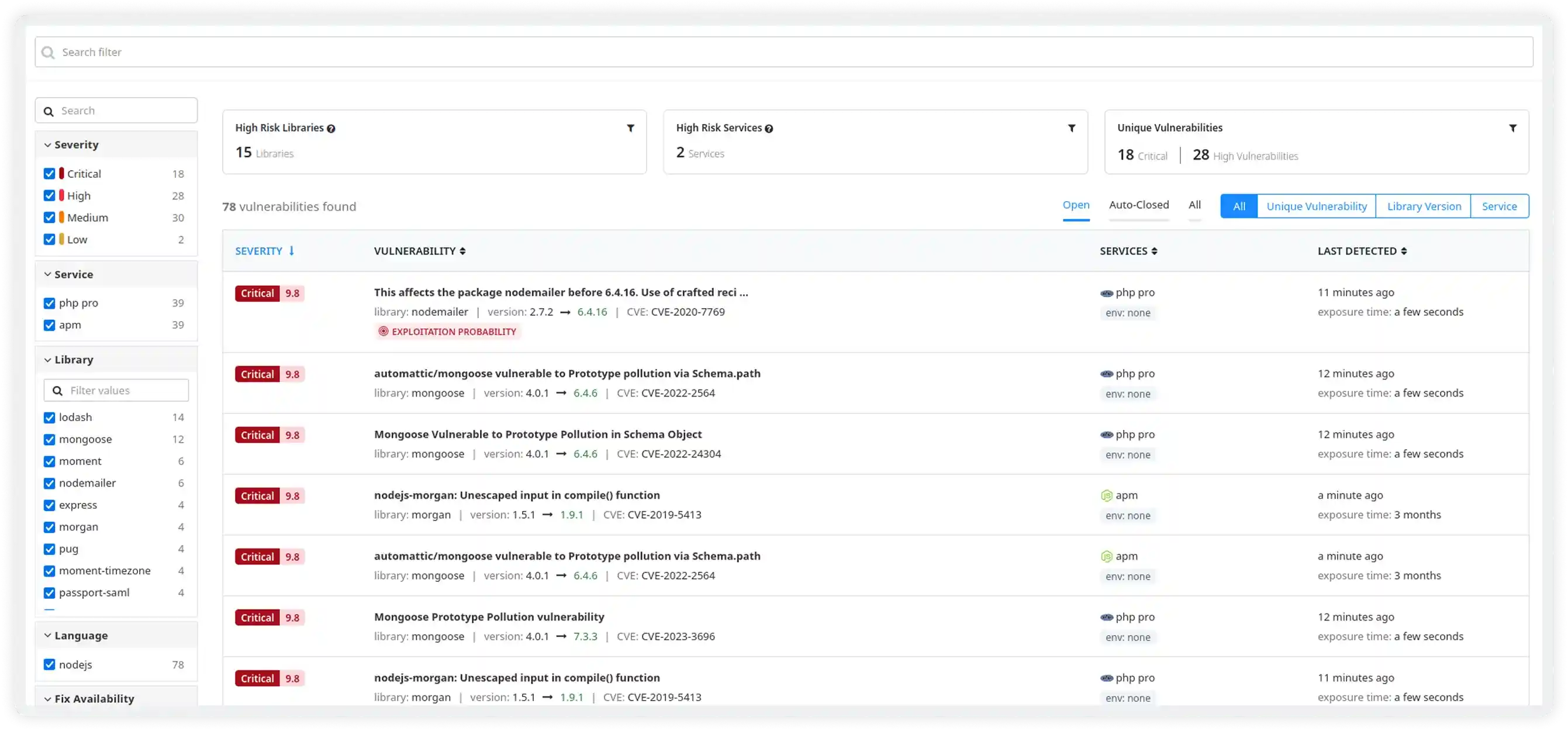
Atatus continuously scans your entire stack including applications, dependencies, containers, and infrastructure and surfaces only the vulnerabilities that are genuinely exploitable in your production environment. AI-powered risk scoring goes beyond CVSS to factor in runtime context, asset sensitivity, and live threat intelligence.
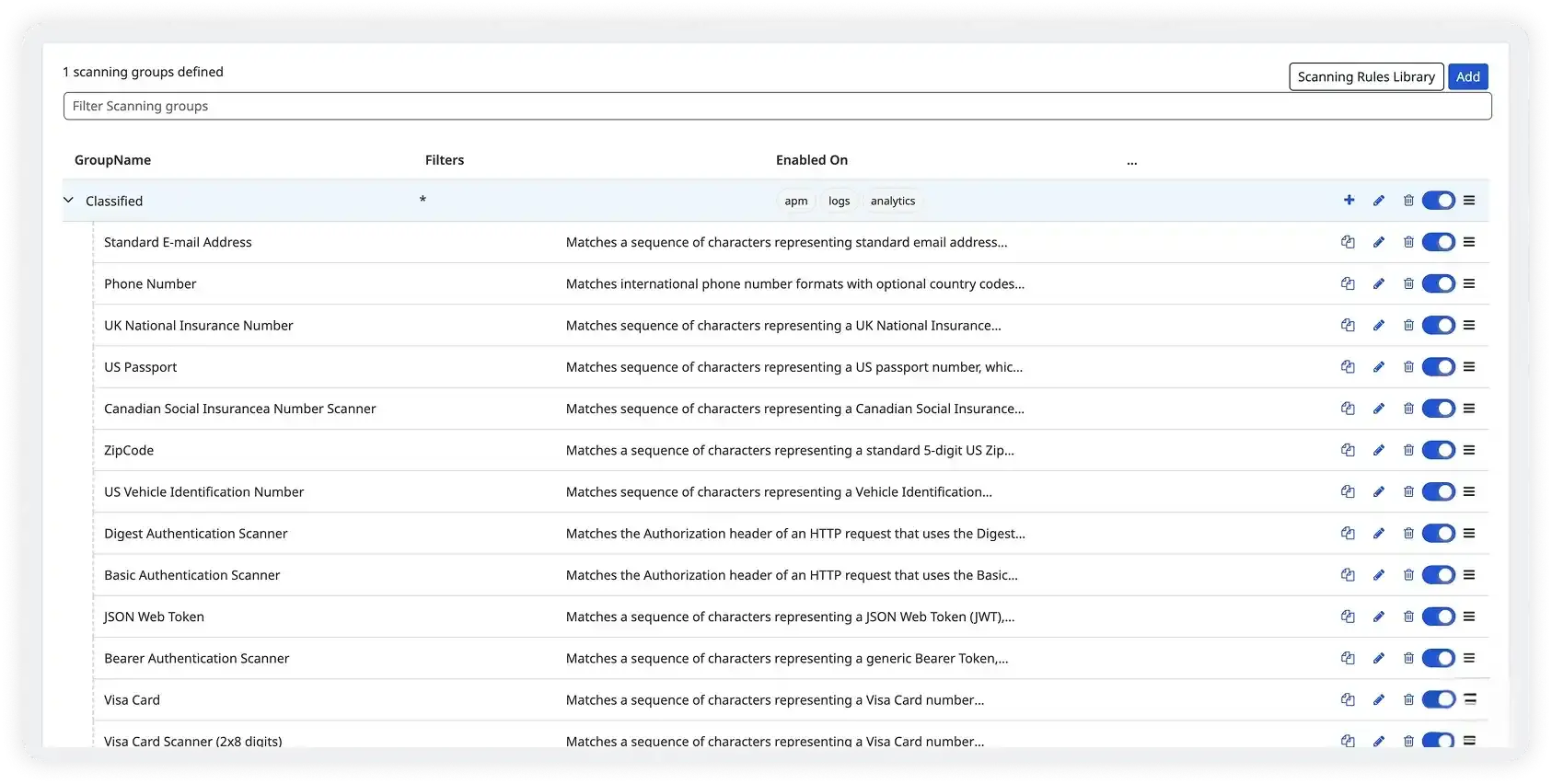
PII, credentials, and regulated data flow through your logs, traces, and RUM events every day, often undetected. Atatus's Sensitive Data Classifier scans and redacts sensitive values at the point of ingestion, in real time, before they ever reach storage or third-party tools.
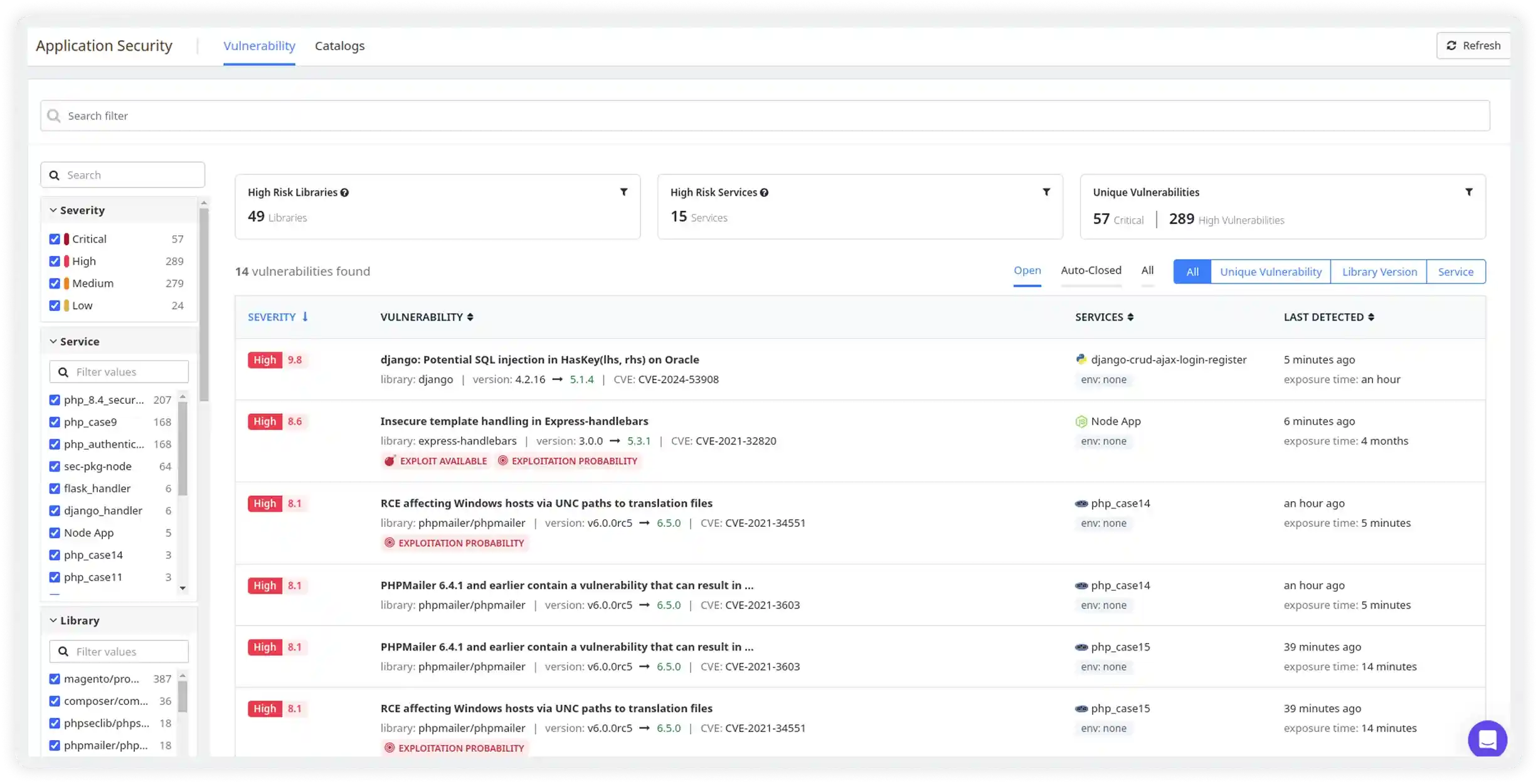
Atatus ASM consolidates SAST, DAST, IAST, and SCA into one unified platform and integrates directly into developer workflows like IDE, PR, and CI/CD. Stop shipping vulnerabilities to production, without stopping your releases.
Pod-level visibility without privileged access. Auto-discover services as they scale. Track vulnerability exposure across namespaces and workloads in real time.
Map attack paths across service boundaries. Identify which services expose sensitive data or sit on a path to your most critical assets before attackers do.
When a CVE drops, know within minutes if your production environment is exposed with exploit-path evidence for your incident response team and the board.
Continuous compliance evidence for PCI DSS, HIPAA, SOC 2, and ISO 27001. Sensitive data is redacted before it reaches your compliance scope, simplifying audits significantly.
Embed security into every PR and deployment without adding manual review cycles. 90% of deploys pass auto-gates untouched; only genuine risks require attention.
Board-ready risk posture dashboards, remediation velocity metrics, and SLA compliance reports - generated automatically from your production environment, not hand-crafted spreadsheets.
Atatus adapts to how engineering teams work across development, operations, and reliability.
Debug errors and slow paths with the full context of what happened.
Atatus for developersTrack deployments and see how each release affects stability.
Atatus for DevOpsWatch latency and error rates to ship with less production risk.
Atatus for release engineers"Solid Product even better support." The integration path is incredibly simple/easy and the overall interface is very intuitive. That said, I had a handful of odd use cases that the support team was incredibly responsive in helping me work through.
Pricing, deployment, data and the agent. If something is missing, a person will answer it on a demo call.
Snyk and Veracode are excellent shift-left tools. Atatus complements them with runtime context, we tell you which vulnerabilities they flagged are actually reachable and exploitable in your live production environment. Most enterprises use both; Atatus reduces the prioritization burden those tools create. Atatus also adds sensitive data classification and APM-native integration that standalone scanners lack.
Not necessarily. Atatus ingests findings from Snyk, Tenable, Qualys, and AWS Inspector, then adds runtime context to prioritize them. Most customers keep their existing scanner for shift-left coverage and add Atatus for production risk prioritization, false positive reduction, and remediation tracking. You get the best of both without managing separate workflows.
Yes. Atatus offers full on-premises deployment for teams with strict data residency or compliance requirements. This covers all three security products including Vulnerability Management, Sensitive Data Classifier, and ASM. On-prem customers get the same feature set as SaaS with predictable pricing (no per-user or data-volume charges). Contact our enterprise team for architecture and pricing details.
Absolutely. Each product including Vulnerability Management, Sensitive Data Classifier, and Application Security Management is available independently. You can start with the one that addresses your most urgent need and expand from there. Customers who adopt all three get the added benefit of shared context: runtime signals from ASM inform vulnerability prioritization, and SDC data flows into compliance reports.
It's similar in intent, but designed specifically for observability pipelines. Traditional DLP monitors network traffic or file systems. Atatus SDC scans your logs, APM traces, and RUM events at the moment of ingestion before they're stored anywhere. Sensitive values are redacted, hashed, or masked in-stream in under 5ms. No retroactive cleanup, no data-at-rest risk, no separate DLP appliance needed.
The key is intelligent automation. Our CI/CD gates only block genuinely high-risk deployments in practice, 90% of deploys pass untouched. Fix suggestions appear in the IDE and PR comments, so developers see context at the right moment rather than getting a batch report days later. The result: security friction goes down, not up, because developers fix issues when context is fresh.
For Kubernetes: Helm chart deployment takes under 5 minutes and your first vulnerability report is ready before your next stand-up. The Sensitive Data Classifier begins scanning at ingestion immediately after configuration, no historical re-processing required. ASM's CI/CD integration typically takes one sprint to wire into your pipeline and see PR-level feedback.
Atatus generates continuous compliance evidence for PCI DSS (via sensitive data redaction and vulnerability SLAs), HIPAA (PHI detection and audit trails), SOC 2 (security posture metrics and change tracking), and ISO 27001 (risk management dashboards and policy enforcement). Automated reports can be scheduled for auditors, saving significant manual effort each compliance cycle.
Start free and send your first trace with OpenTelemetry or the Atatus agents. APM, logs, RUM, infrastructure and SIEM, all on one timeline.